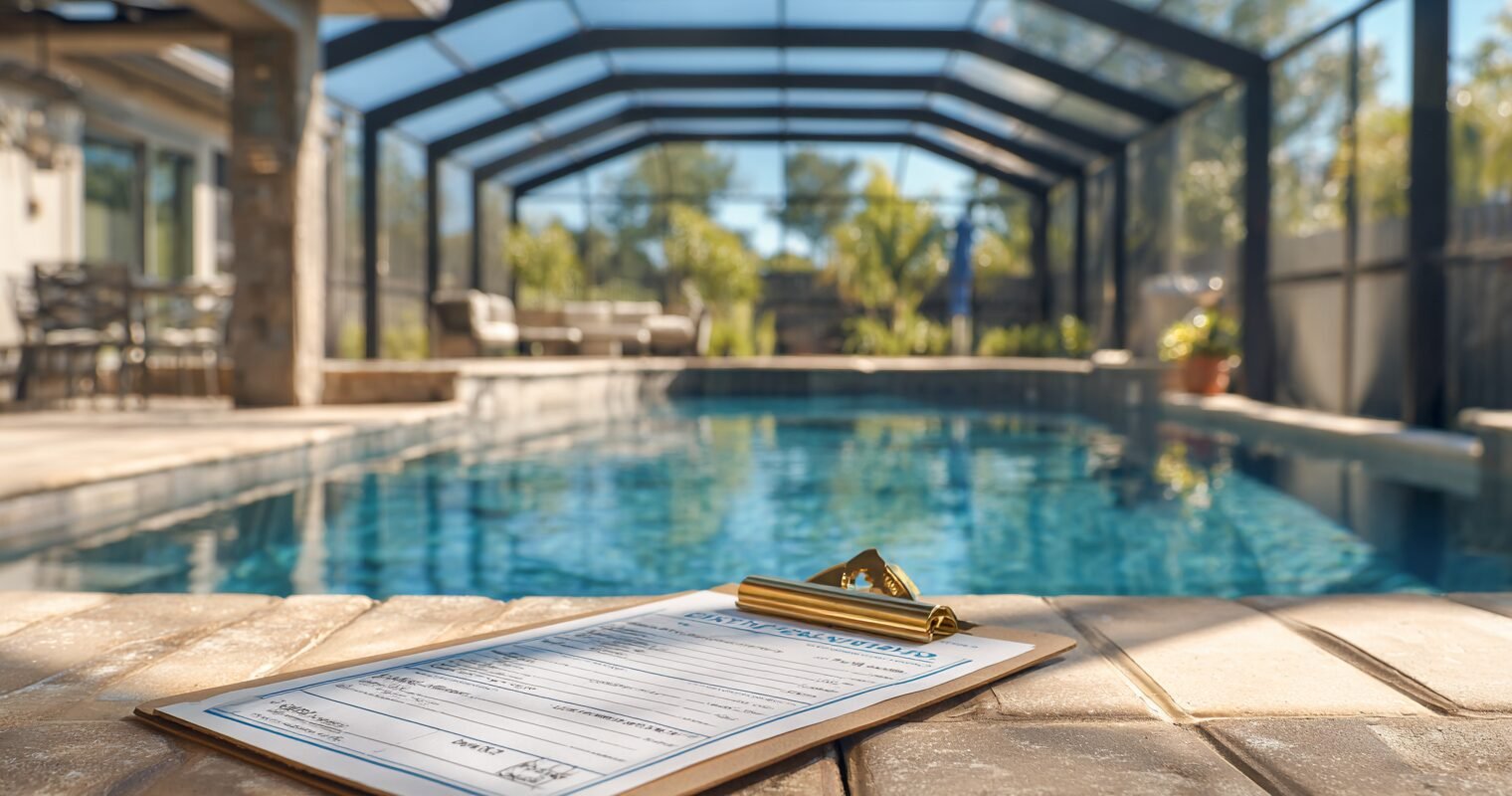
Short answer: sign your contract in fall or winter. Off-season contracts frequently price 5–10% below spring quotes, permits move faster, and your pool is finished before swim season instead of during it. The worst time to start is April — when every homeowner in your county calls the same builders at once, pushing both prices and timelines up.
Why Off-Season Contracts Cost Less
Pool building is brutally seasonal. Builders staff for peak demand and then face empty calendars from October through February — but crews, equipment payments, and overhead don’t pause. A signed winter contract keeps a crew working, and builders discount to get it.
You also get better attention. A builder running three simultaneous projects in June gives your job a fraction of the oversight they’d give it in January. The gaps between trades — the real cause of most schedule slippage — shrink dramatically off-season.
The Seasonal Calendar
Fall (September–November) — the sweet spot. Builders are wrapping the season and hungry for winter work. Permit offices have cleared their spring backlog. Weather is still workable almost everywhere. Best combination of price, attention, and schedule.
Winter (December–February) — best pricing. Deepest discounts of the year. In warm states, construction proceeds normally. In freeze climates, many builders excavate in late fall, shell over winter, and finish in early spring — you’ll live with a construction site for a few months, but you swim on day one of the season.
Spring (March–May) — the trap. Everyone books now. Prices firm up, permit queues stretch, and a gunite pool contracted in April routinely finishes in August — one month before the season ends in much of the country. If you contract in spring, expect to lose most of the first summer.
Summer (June–August) — mixed. Peak pricing early, but late-summer contracts start looking like fall contracts as builders eye their winter calendars. August can be a genuinely good time to negotiate.
Work Backward From Your Swim Date
Total project time is 4–8 months from first call to first swim — construction plus design, bidding, and permitting. To swim by Memorial Day:
- Gunite: contract by December or January (8–16 weeks of build, plus permitting)
- Vinyl liner: contract by January or February
- Fiberglass: contract by February or March
Our full pool construction timeline breaks down every phase, including where delays actually come from.
Climate Changes the Answer
Warm-climate states — Florida, Arizona, Texas, southern California — build year-round, so winter contracting is pure upside: lower price, open calendar, no weather penalty.
Freeze-climate states — Ohio, New York, the upper Midwest — have a hard construction window. Concrete and excavation stop when the ground freezes. The move here is a fall contract with a late-fall dig, finishing in early spring. Ask your builder specifically how late they’ll excavate; the answer varies by company more than by climate.
Don’t Let Timing Rush the Vetting
One caution: “sign before the price goes up” is also the oldest pressure tactic in the industry. A genuine off-season discount survives a week of due diligence. If a builder needs your signature today, that’s not seasonality — that’s a red flag. Our builder guide lists the rest.
Use the quiet months to your advantage: price your build in the pool cost calculator, collect three bids on identical specs, and sign when you’re confident — not when you’re rushed.
Frequently Asked Questions
Is it cheaper to build a pool in the off-season?
Usually — fall and winter contracts often price 5–10% below spring quotes because builders discount to keep crews working through slow months. You also get better scheduling and more builder attention.
When should I start planning to swim by summer?
Contract by December or January for gunite, January–February for vinyl, and February–March for fiberglass. Permitting alone can take 6–10 weeks in strict jurisdictions, so early is safer than tight.
Can pools be built in the winter in cold climates?
Partially. Excavation and concrete work stop once the ground freezes, but many northern builders dig in late fall, set the shell over winter, and complete decking and finishing in early spring — so the pool is ready when the season opens.