Short answer: 3 to 16 weeks of construction, but 4 to 8 months from first phone call to first swim. Fiberglass is fastest at 3–6 weeks of build time; vinyl liner runs 4–8 weeks; gunite takes 8–16 weeks because concrete cures on its own schedule. What most homeowners underestimate is everything before the excavator arrives — design, contracts, and permitting routinely add 6–12 weeks on their own.
The Full Timeline, Start to Finish
Weeks 1–4: Design and bidding. Consultations, site visits, and three comparable bids. Rushing this phase is where bad builder choices happen — our builder vetting guide covers what to ask.
Weeks 3–6: Contract and surveys. Final design, engineering drawings, and a stamped site plan showing setbacks and equipment placement.
Weeks 4–12: Permitting. The wild card. Fast Sun Belt counties turn permits in 1–3 weeks; New York villages and California plan-check jurisdictions routinely take 6–10. HOA architectural review runs in parallel and is often slower than the city. See our permits guide.
Then construction begins — and this is where pool type decides everything.
Construction Time by Pool Type
| Pool type | Build time | Why |
|---|---|---|
| Fiberglass | 3–6 weeks | Shell arrives pre-made; often set in the ground within days |
| Vinyl liner | 4–8 weeks | Walls assembled on site, then liner fitted |
| Gunite / concrete | 8–16 weeks | Steel, spray, multi-week cure, plaster, fill — none of it rushable |
Our pool types guide covers the full cost-and-lifespan tradeoffs behind those timelines.
What Happens Week by Week (Gunite Example)
- Layout and excavation (days 1–4). The dig is fast and dramatic — most of the visible progress you’ll ever see happens in 72 hours.
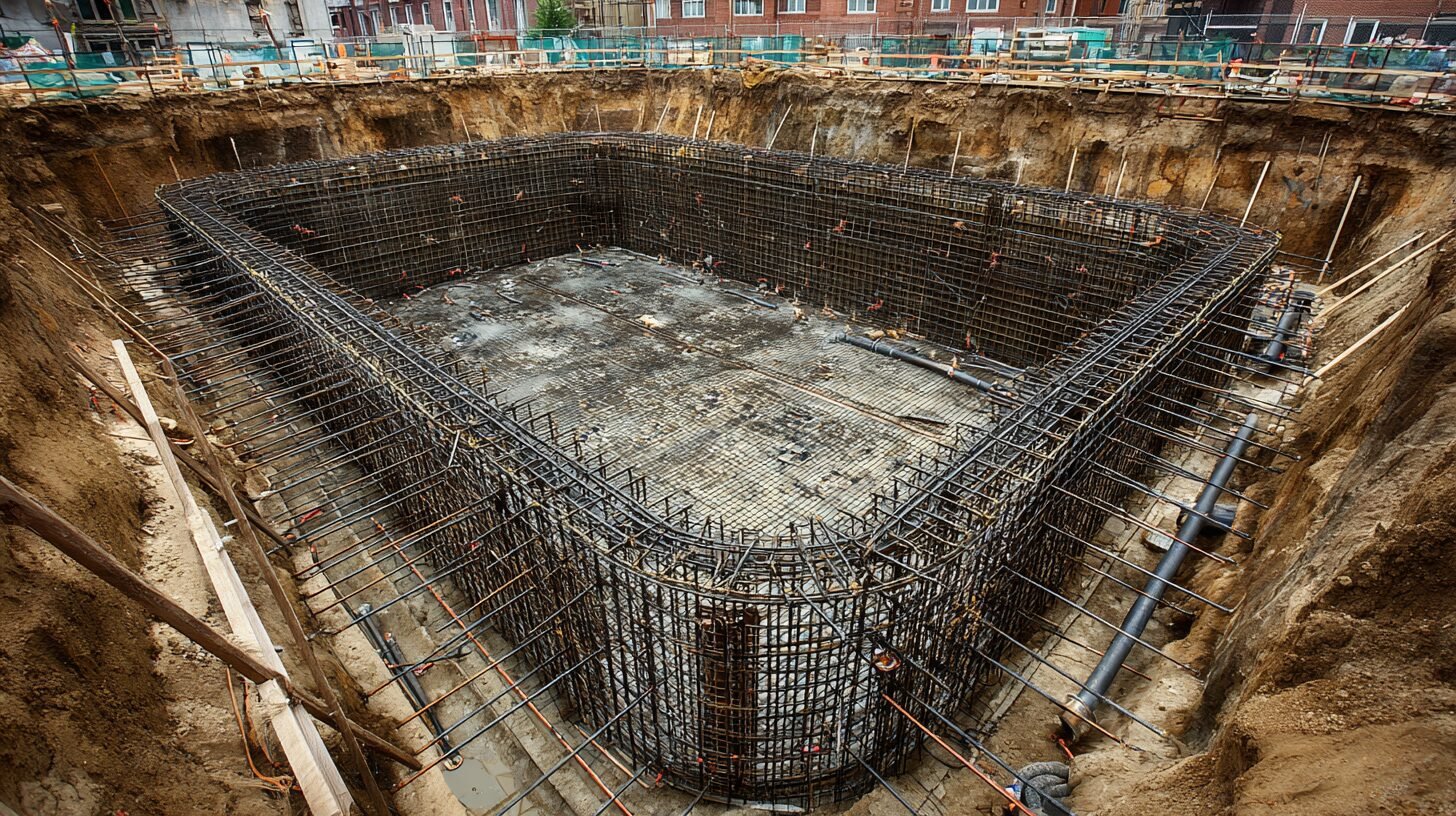
- Steel and plumbing (week 2). Rebar cage tied, plumbing run, first inspection.
- Gunite spray (week 3). One loud day, then the shell must cure — typically 28 days to full strength, though tile can start sooner.
- Tile and coping (weeks 4–6). Waterline tile and the pool’s edge cap.
- Decking (weeks 6–9). Forming, pouring, curing. In freeze climates this is weather-dependent.
- Equipment set and electrical (weeks 8–10). Pump, filter, heater, bonding, inspection.
- Plaster and fill (weeks 10–12). Interior finish goes in, then the pool is filled immediately and continuously — a stop-start fill leaves a permanent ring.
- Startup chemistry (weeks 12–13). A week or more of daily brushing and balancing before normal swimming.
What Causes Delays
- Permit backlogs — worst in spring, when everyone applies at once
- Weather — rain stops excavation and concrete work; freezing stops nearly everything
- Excavation surprises — rock, caliche, groundwater, or buried utilities can add days to weeks
- Inspection scheduling — each inspection is a queue, not an appointment, in busy jurisdictions
- Crew stacking — builders juggle multiple sites; the gap between trades is often longer than the work itself
- Change orders — every mid-build design change resets a portion of the schedule
When to Start If You Want to Swim This Summer
Work backward. For a Memorial Day swim with a gunite pool, sign your contract by December or January. For fiberglass, February or March is usually enough. Everyone calls builders in April — which is precisely why April contracts often mean August pools, at peak-season prices.
Off-season contracting is the single easiest way to get both a better price and a better calendar slot. Price your build now with the pool cost calculator, and use the winter to collect bids without pressure.
Frequently Asked Questions
How long does it take to build an inground pool?
Construction takes 3–6 weeks for fiberglass, 4–8 weeks for vinyl liner, and 8–16 weeks for gunite. Including design, contracts, and permitting, plan on 4–8 months from first call to first swim.
Why do concrete pools take so long?
Gunite is built in sequence on site: excavation, steel, spraying, a cure period of up to 28 days, then tile, coping, decking, and plaster. Each stage requires the previous one to finish, and the concrete cure genuinely cannot be accelerated.
Can you build a pool in winter?
In warm climates, absolutely — and it’s often cheaper and faster because builder calendars are open. In freeze climates, excavation and concrete work stop when the ground freezes, though many northern builders dig in late fall and finish in early spring.
How long after a pool is built can you swim?
For fiberglass and vinyl, usually within a day or two of filling and balancing. For plaster gunite pools, expect about a week of startup chemistry — daily brushing and balancing — before normal swimming, since fresh plaster actively changes the water chemistry.