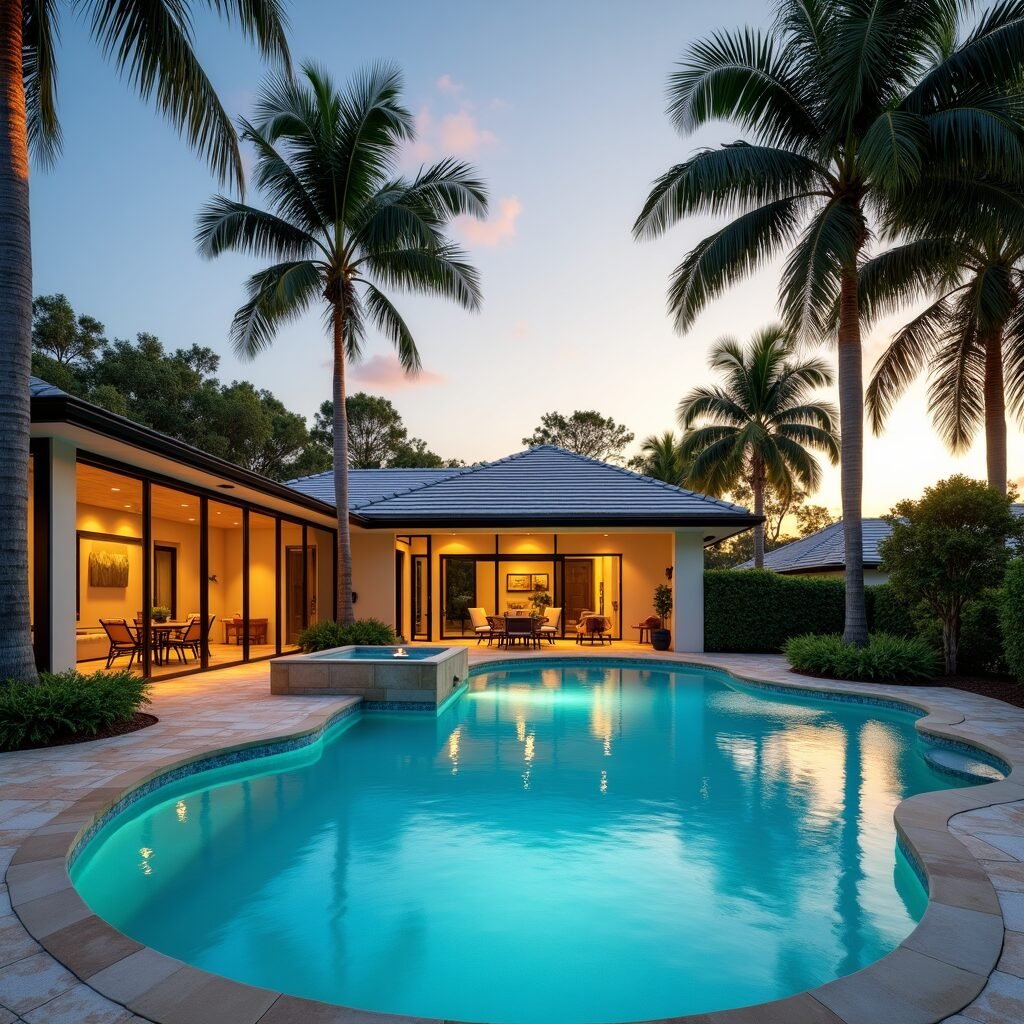
Short answer: a pool is worth it if you’ll swim in it regularly and can absorb the upkeep without strain — and it’s a bad deal if you’re buying it for resale value. The honest test isn’t the $60,000 construction number. It’s whether your household will actually use the pool 40+ days a year for the next decade, and whether $1,200–$4,500 in annual maintenance fits your budget comfortably rather than tightly.
Here’s the full cost-benefit picture, including the numbers most pool-buying guides skip.
The True Ten-Year Cost
Take a mid-range $65,000 fiberglass pool and run it out ten years:
- Construction: $65,000 (or roughly $790/month financed over 10 years at 8%)
- Maintenance: $1,200–$2,000/year → $12,000–$20,000
- Added electricity: $200–$1,200/year depending on pump and heater use
- Insurance increase: roughly $50–$200/year
- Property tax increase: varies by jurisdiction, but real
- Repairs and replacements: heaters last 8–12 years, pumps 8–10; budget a few thousand
Ten-year all-in: roughly $85,000–$100,000 for fiberglass, more for gunite. Against that, resale typically returns 20–50% of construction cost — see our honest look at whether pools add home value.
The Usage Math That Actually Decides It
Divide total cost by swims. A family using the pool 60 days a year for ten years gets 600 uses at roughly $150 each. Sounds steep — until you price 600 family outings, day passes, or a lake house. A household that swims 12 times a year is paying $750 per swim, which is indefensible by any measure.
The strongest predictor of a happy pool owner is climate plus kids. Sun Belt households with children between 5 and 17 use pools heavily and consistently. Empty-nesters in short-season markets consistently report the lowest use — and the loudest regrets. Check your local season honestly in our state-by-state guides before assuming.
Reasons People Are Glad They Built
- The yard becomes the destination. Teenagers stay home and bring friends; that’s the benefit owners cite most.
- Daily use, not event use. Morning laps, evening cool-downs — the pool becomes routine rather than occasion.
- Low-impact exercise. Genuinely valuable for joint issues, recovery, and aging in place.
- Climate necessity. In Phoenix or south Florida, a pool is closer to air conditioning than luxury.
Reasons People Regret It
- The novelty faded. Heavy use in year one, sporadic by year three — the most common regret pattern.
- Maintenance became a chore. Thirty to forty-five minutes weekly, every week, plus chemistry that punishes neglect. Our maintenance guide covers what the routine really involves.
- The budget was tight from the start. Overextending on construction leaves nothing for the heater that would have doubled usable season.
- The yard disappeared. Pools that consume the entire usable yard trade one amenity for another.
- They moved in three years. The worst-case financial scenario — full cost, partial recovery, few swims.
Cheaper Ways to Get Most of the Benefit
- Plunge pool ($25,000–$45,000). Small, deep, cheap to heat and maintain — ideal for cooling off and adult use.
- Quality above ground with a deck ($8,000–$20,000). Most of the swimming, a fraction of the commitment, removable later.
- Swim spa ($20,000–$40,000). Year-round use in cold climates where an inground pool sits idle nine months.
- Community or club membership. Genuinely worth pricing against a decade of pool ownership before you dig.
A Simple Decision Test
Answer these honestly. Three or more yeses and a pool is probably worth it for you:
- Will we stay in this house at least 7 more years?
- Is our local swim season 5+ months, or will we heat?
- Can we cover annual maintenance without cutting anything else?
- Does someone in the household genuinely want to maintain it — not just swim in it?
- Will the pool leave usable yard behind?
- Are we fine if it adds little to resale value?
Get your real number first — the pool cost calculator prices your size, type, and state with add-ons broken out, so you’re deciding against an actual figure instead of a national average.
Frequently Asked Questions
Is a swimming pool a good investment?
Financially, no — pools typically return 20–50% of their cost at resale, one of the weakest returns in home improvement. They’re a lifestyle purchase, and worth it when the use justifies the spend rather than the equity.
How much does a pool cost per month to own?
Maintenance and utilities average $100–$375 a month depending on pool type, climate, and whether you heat. Add roughly $500–$900 a month if you’re financing construction over ten years.
Do most people regret building a pool?
No — most owners in warm climates with children report high satisfaction. Regret concentrates in short-season markets, households that overextended financially, and owners who underestimated the weekly maintenance commitment.