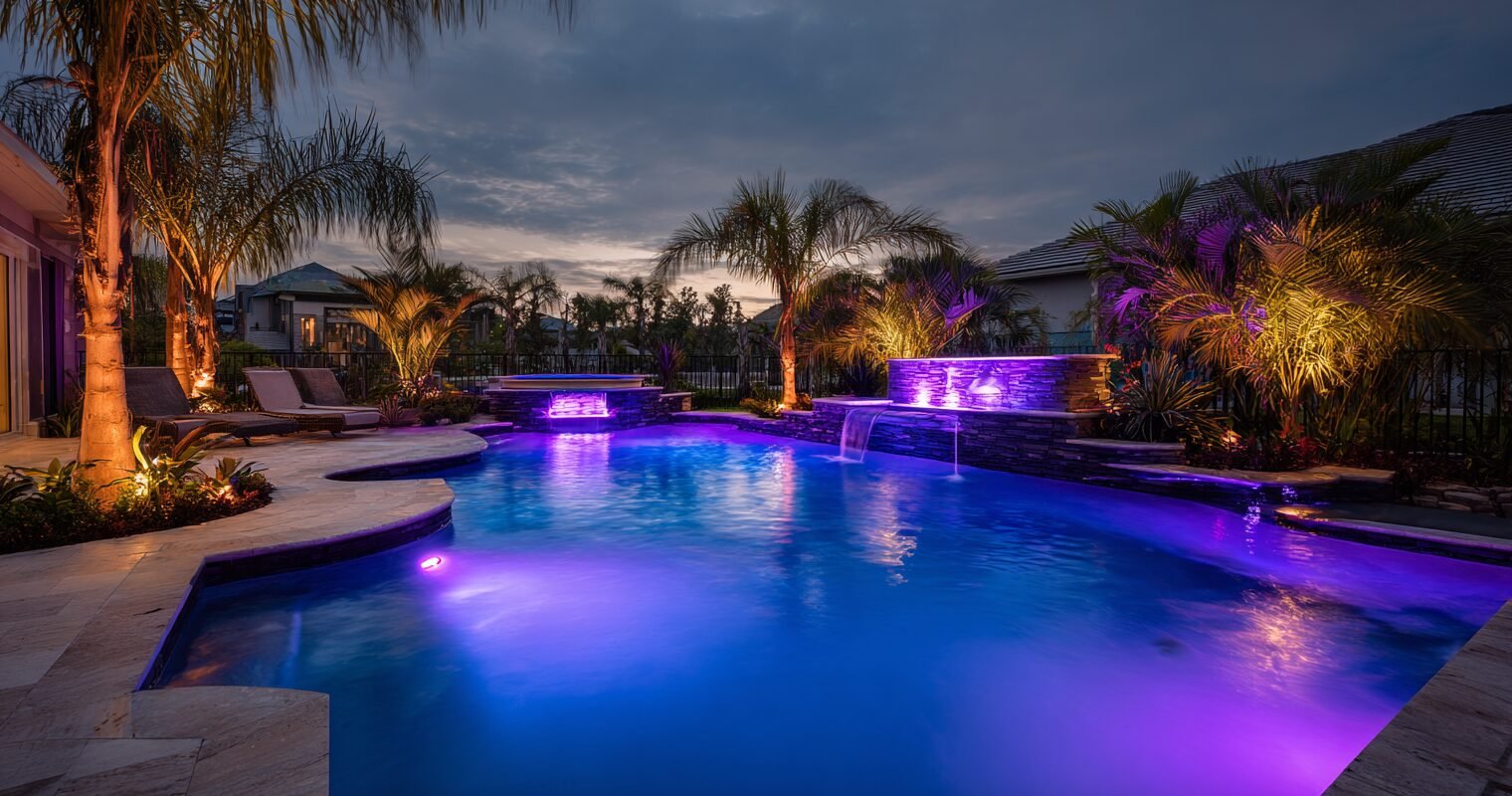
Short answer: $100 to $375 a month for most inground pools — roughly $1,200–$4,500 a year once you total chemicals, electricity, water, and repairs. Fiberglass pools sit at the bottom of that range, gunite at the top, and the two biggest swing factors are whether you run a heater and whether you hire a service.
Here’s the month-by-month breakdown, and the four changes that cut the bill most.
Monthly Cost by Pool Type
| Pool type | Annual upkeep | Monthly average |
|---|---|---|
| Fiberglass | $1,200 – $2,000 | $100 – $167 |
| Vinyl liner | $1,500 – $2,500 | $125 – $208 |
| Gunite / concrete | $2,500 – $4,500 | $208 – $375 |
Gunite costs the most because plaster is slightly porous, which invites algae and demands more chemicals and brushing. Fiberglass gelcoat is the least demanding surface in the industry. Vinyl sits in between — but carries a hidden line item covered below.
Where the Money Goes
Chemicals: $40–$85/month in season. Chlorine, pH adjusters, algaecide, shock. Saltwater systems cut this to roughly $10–$20 a month in salt, offset by a salt cell that needs replacing every 3–7 years at $500–$1,100.
Electricity: $15–$120/month. Almost entirely the pump. A single-speed pump can cost $60–$120 a month to run; a variable-speed pump does the same job for $15–$30. If you have an older pump, this is the single biggest lever you control.
Heating: $0–$400/month when used. The wildcard. Gas heaters cost $200–$400 a month of regular use; heat pumps run about a third of that in mild climates; a solar cover is nearly free heat and cuts evaporation up to 95%.
Water: $10–$40/month. Evaporation and backwashing. In desert climates like Arizona, an uncovered pool can lose its entire volume over a year — covers pay for themselves here twice over.
Repairs and replacement reserve: $30–$80/month. Nobody budgets this and everybody eventually pays it. Pumps last 8–10 years, heaters 8–12, filters 10+, and gunite needs resurfacing every 10–15 years at $10,000+. Vinyl liners need replacing every 5–9 years at $3,000–$7,000 — about $50/month set aside.
Professional service (optional): $100–$250/month in season. Weekly cleaning and chemistry. DIY costs about 30–45 minutes a week and roughly a third as much in materials.
Seasonal vs. Year-Round Markets
Monthly averages mislead in cold climates. An Ohio pool costs almost nothing December through March, then spikes in season — plus $300–$400 each for professional opening and closing. A Florida pool runs a flatter, year-round bill with a lower peak but no off months. Total annual spend often lands surprisingly close; the cash-flow shape is what differs.
Four Changes That Cut the Bill Most
- Variable-speed pump. Saves $400–$1,000 a year over a single-speed. Pays for itself in about two seasons and is required on new builds by federal efficiency rules anyway.
- A cover. Cuts evaporation up to 95%, holds heat overnight, and keeps debris out — reducing water, heating, and chemical costs simultaneously.
- Test weekly and dose correctly. A green pool costs $300–$600 to professionally recover, and chronic imbalance destroys liners, heaters, and plaster. Fifteen dollars of test strips is the best insurance in the industry.
- DIY the weekly routine. The single largest controllable expense is labor. Our maintenance guide walks through the whole weekly routine in detail.
Planning a build? Choose pool type with these numbers in view — over 25 years, the maintenance gap between gunite and fiberglass can exceed $40,000, often larger than the upfront price difference. The pool cost calculator shows annual maintenance alongside construction cost for each type.
Frequently Asked Questions
How much does it cost to maintain a pool per month?
Most inground pools cost $100–$375 a month, or $1,200–$4,500 a year. Fiberglass is cheapest, gunite most expensive, and adding a heater or a weekly pool service pushes you toward the top of the range.
Is a saltwater pool cheaper to maintain?
Modestly — usually $200–$500 a year less in chemicals. Salt costs $50–$100 annually versus $500–$1,000 for tablets, but the salt cell needs replacing every 3–7 years at $500–$1,100, which eats part of the savings.
How much does it cost to run a pool pump?
A single-speed pump costs roughly $60–$120 a month; a modern variable-speed pump does the same filtration for $15–$30. Upgrading typically pays for itself within two seasons.
Is it cheaper to maintain a pool yourself?
Yes, substantially — DIY costs about a third of professional service in materials and takes 30–45 minutes a week. Many owners hire service for the first season to learn the routine, then take it over.