The builder you hire matters more than any other choice you’ll make — more than shape, more than materials, more than budget. A great builder makes an average design excellent; a bad one turns a premium budget into a lawsuit. Here’s how to tell them apart before you sign.
Get Three Bids — But Make Them Comparable
Pool bids are notoriously hard to compare because every builder scopes differently: one includes decking, another excludes electrical runs, a third quotes an allowance for “site prep” that mysteriously doubles later. The fix is to hand every builder the same written spec — pool type, dimensions, finish level, deck area, equipment — and ask them to bid that. Run your specs through our free cost calculator and print the line-item results; it’s exactly the one-page spec that makes bids comparable.
The Vetting Checklist
- License: verify the contractor’s license number with your state board — online, free, two minutes. Confirm it covers pool construction specifically.
- Insurance: ask for certificates of general liability and workers’ comp, sent directly from their insurer. An uninsured crew injury on your property becomes your problem.
- Age of business: pool builders fail at high rates in downturns. A builder with 10+ years under the same name has survived at least one bad market.
- References you choose: ask for a list of the last five pools completed — not their five favorites — and call two. Ask: did the price change, did the timeline hold, how were problems handled?
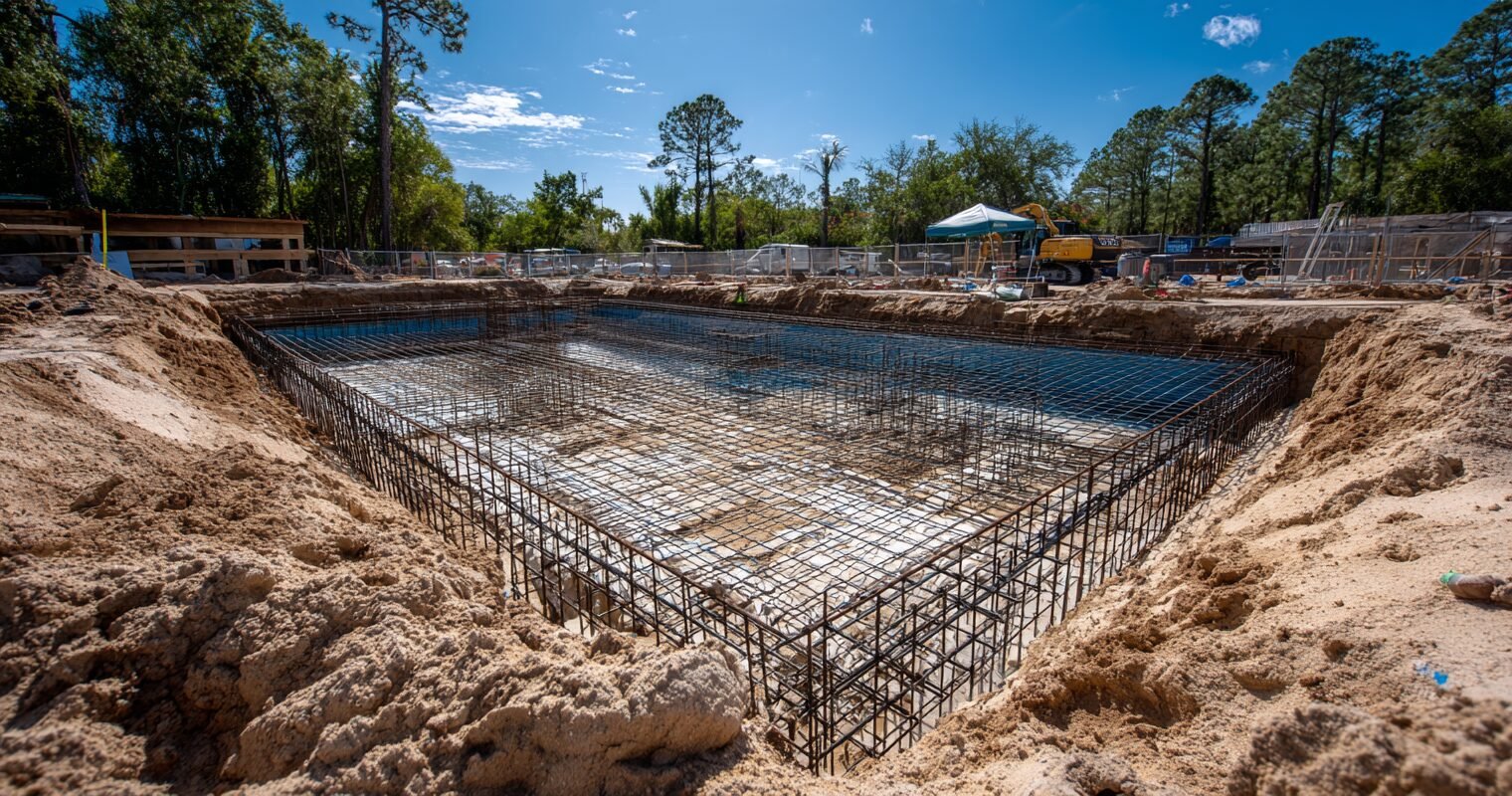
- A recent jobsite: good builders will let you see a pool under construction. Tidy sites and covered rebar tell you more than any brochure.
Red Flags That Should End the Conversation
- A deposit over ~25% before any work begins (several states cap deposits by law — a builder asking for 50% down is financing their previous job with your money)
- Pressure to sign “today’s price” on the first visit
- Vague allowances instead of specified materials (“standard tile” is not a specification)
- No written schedule of payment milestones tied to completed work
- Reluctance to put permit responsibility in the contract
- A quote dramatically below the others — in pool construction, the too-good bid is where change orders live
What a Good Contract Contains
Before signing, make sure the contract specifies: exact dimensions and depths; named brands and models for pump, filter, heater, and cleaner; the interior finish product; deck material and square footage; who pulls permits; a payment schedule tied to milestones (excavation, shell, plumbing, deck, startup); a target completion window with communication expectations; and warranty terms for structure, plumbing, and equipment separately. If a builder resists writing any of these down, believe what that tells you.
Timing Your Project
Everyone calls builders in April. Contracts signed in late summer and fall often price 5–10% better, and an off-season build means your pool opens on day one of swim season instead of mid-August. In freeze climates, shells can go in surprisingly late in the year — ask.
Frequently Asked Questions
Should I hire a national franchise or a local independent?
Both build good pools. Franchises offer process consistency and sometimes stronger warranties; established independents often win on design flexibility and price. The vetting checklist above matters far more than the logo on the truck.
Can I act as my own general contractor?
Owner-builder pool projects can save 15–25%, but you’re coordinating excavation, steel, gunite, plumbing, electrical, tile, and deck crews whose schedules interlock tightly. If you’ve GC’d construction before, it’s viable. If this would be your first rodeo, a pool is a hard place to learn.