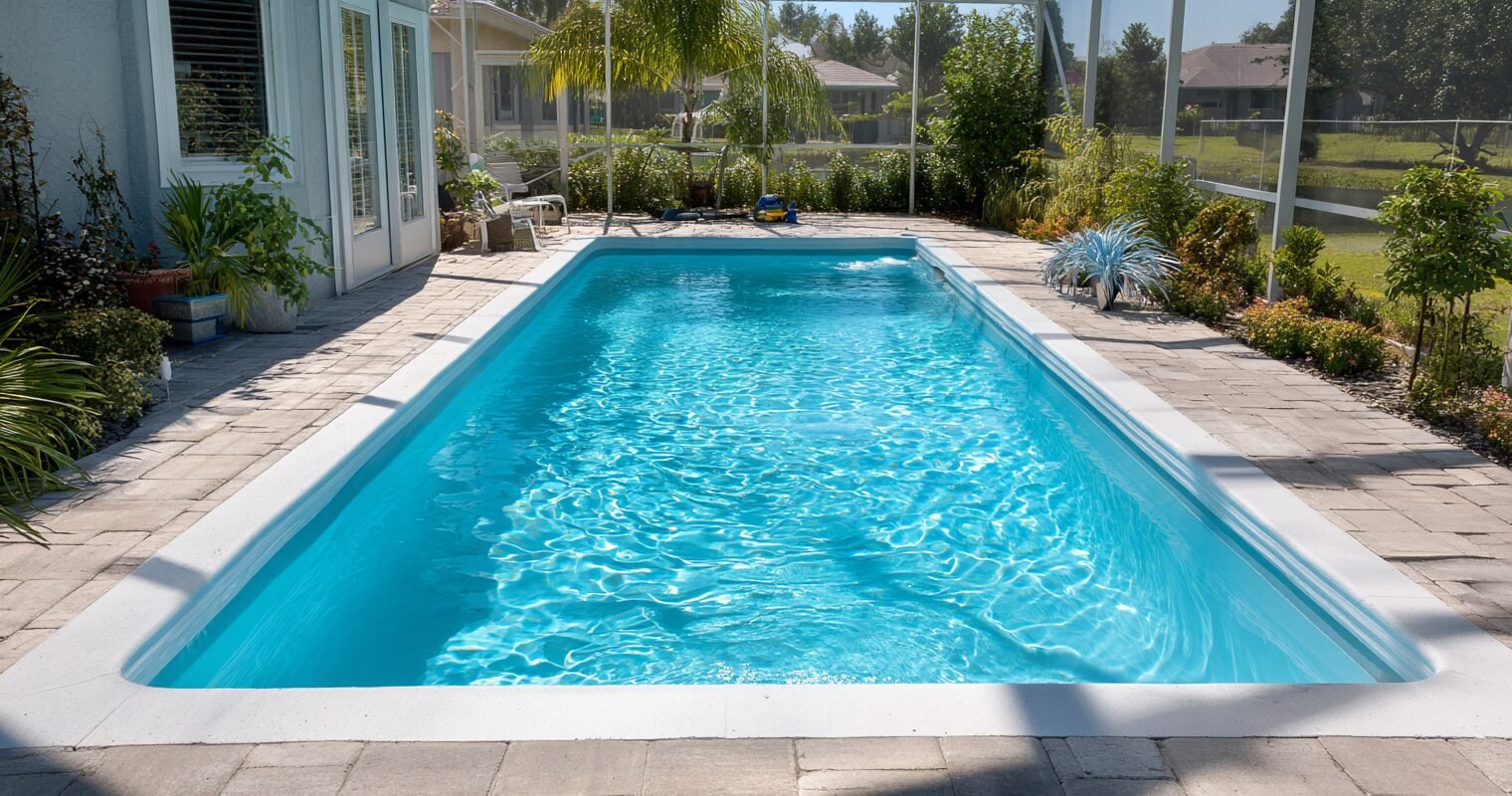
This is the matchup that decides most pool projects, and the honest answer is unsatisfying: both are excellent pools, and the right one depends on which trade-offs you can live with. Here’s the head-to-head, category by category, with numbers instead of adjectives.
Upfront Cost: Fiberglass Wins
Fiberglass installs run roughly $50–$100 per square foot; gunite runs $75–$150. On a 450-square-foot pool, that’s a typical gap of $15,000–$25,000 in fiberglass’s favor. Concrete quotes also carry more variance — complex shapes, custom depths, and long cure schedules give the price more places to grow.
Lifetime Cost: Fiberglass Wins Bigger
The gap widens after the build. A gunite pool needs $2,500–$4,500 a year in chemicals and upkeep, plus a $10,000+ resurfacing every 10–15 years. Fiberglass needs $1,200–$2,000 a year and no scheduled resurfacing. Over 25 years, total ownership cost typically favors fiberglass by $40,000 or more. If the spreadsheet is making your decision, it’s already made.
Design Freedom: Concrete Wins, and It’s Not Close
Fiberglass shells come from a catalog — excellent catalogs these days, but catalogs, capped around 16 feet wide and 40 feet long by road-transport rules. Gunite is limited only by budget and physics: vanishing edges, beach entries, 12-foot diving wells, integrated spas, freeform lagoons. If your vision doesn’t exist in a shell manufacturer’s brochure, concrete is your answer.
Timeline: Fiberglass by a Mile
Fiberglass: 3–6 weeks, and the shell is often swimming-ready within days of arrival. Gunite: 8–16 weeks of excavation, steel, spraying, a multi-week cure, plaster, and startup chemistry. Sign a gunite contract in May and you may be swimming in September; sign fiberglass in May and you’re swimming in June.
Durability: Both Win, Differently
A gunite structure lasts 50+ years — it’s the closest thing to permanent in residential construction, though its interior finish needs periodic renewal. A fiberglass shell is rated 25–30 years, resists ground movement better in expansive soils, and its gelcoat never needs replastering. In freeze-thaw climates both perform well when built correctly; fiberglass’s flexibility is a quiet advantage in shifting soils.
Feel and Aesthetics
Gelcoat is smooth underfoot; pebble finishes have texture that some people love and some find abrasive. Concrete’s tile and finish options simply look more custom — because they are. But a fiberglass pool wrapped in good coping and travertine decking reads far more premium than the shell price suggests. Our materials guide covers how finish choices change the look and the bill.
The Verdict
Buy fiberglass if a catalog shape fits your yard and you value speed and low ownership costs. Buy gunite if customization, size, or permanence tops your list and you’ve budgeted honestly for maintenance. Either way, price both in our free cost calculator — switching pool types takes one click, and seeing the numbers side by side for your region tends to settle the debate quickly.