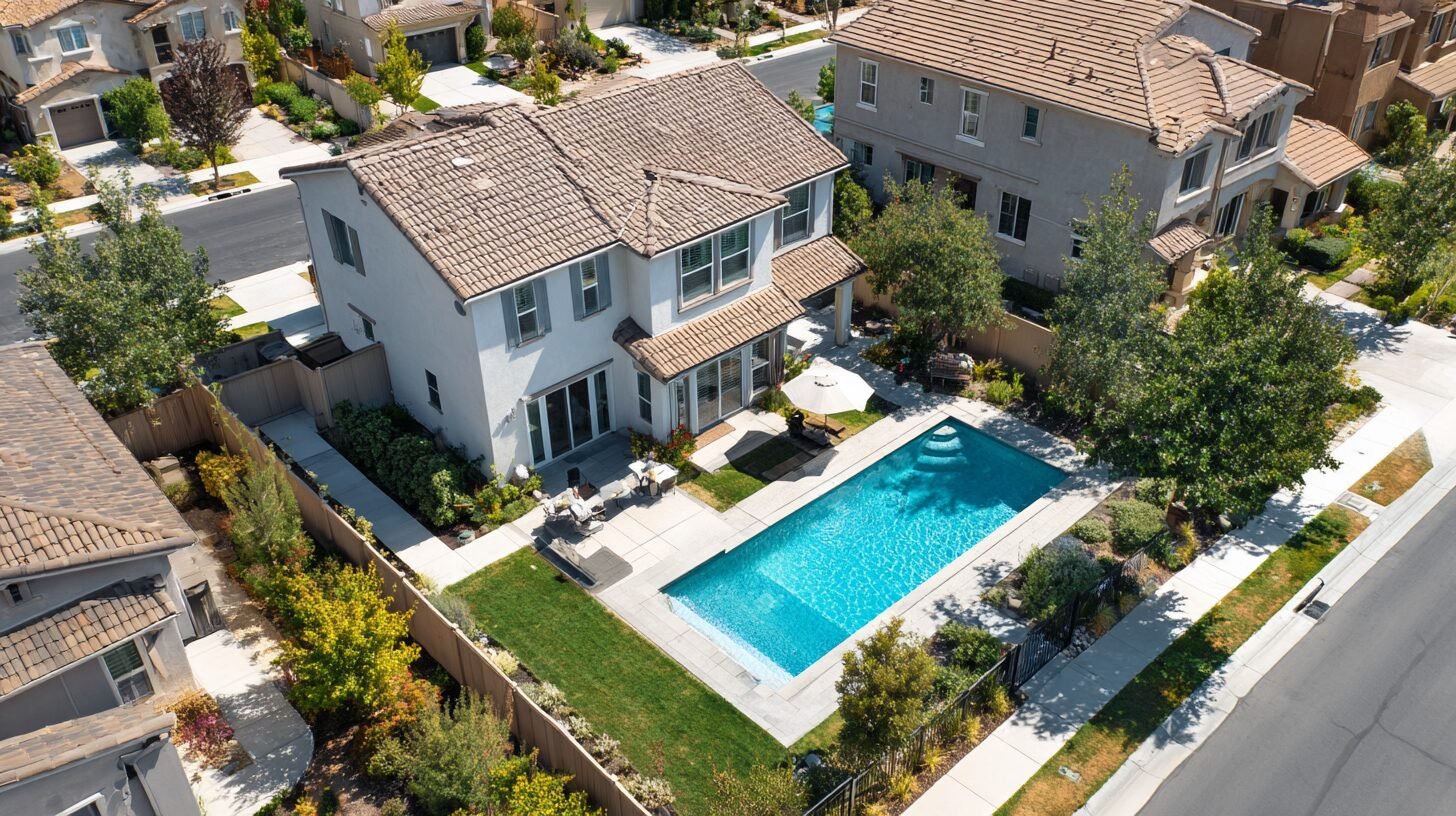
Short answer: sometimes — and almost never as much as the pool cost. A well-built inground pool typically returns 20% to 50% of its cost at resale, and the number swings hard on climate, neighborhood, and condition. In Phoenix, Miami, or a Dallas suburb where most comparable homes have pools, a pool can add real value and speed up a sale. In Minneapolis or Seattle, it can shrink your buyer pool and sit as a maintenance liability on the inspection report.
Build a pool because you’ll swim in it. If you’re building it as an investment, the math almost never works.
What the Numbers Actually Show
Across most national remodeling and real-estate cost studies, inground pools recover a fraction of their construction cost — commonly cited in the 20–50% range. On a $65,000 pool, that’s roughly $13,000 to $32,000 of added appraised value. Compare that to a kitchen remodel (typically 60–80% recovery) or a new roof, and the pool is one of the weakest dollar-for-dollar returns in residential construction.
There’s a second effect worth naming: pools change who buys your house, not just what they’ll pay. Families with toddlers often screen pools out. Retirees frequently see maintenance, not recreation. In pool-normal markets that filtering is negligible; in pool-rare markets it’s the whole story.
Where Pools Add the Most Value
- Hot-climate metros where pools are the norm. Phoenix, Las Vegas, Miami, Tampa, Houston, Dallas, Orlando. When most comparable listings have a pool, not having one is the deduction. See our Arizona, Florida, and Texas cost guides for those markets.
- Higher-end homes. On a $1.2M house, a $90,000 pool reads as expected finish. On a $280,000 house, the same pool is an outlier buyers won’t fully pay for.
- Large lots where the pool doesn’t consume the yard. Buyers with kids and dogs want both. A pool that eats 90% of the usable yard is a negative in most markets.
- Pools in excellent condition. Fresh finish, modern variable-speed equipment, working heater, clean water. A tired pool with a failing liner reads as a $10,000 repair bill.
Where Pools Subtract Value
- Short-season northern markets where buyers weigh 14 weeks of swimming against 52 weeks of upkeep — see our Ohio and New York guides for how that math lands locally.
- Neglected pools. Green water at showing time can cost more in perceived repair than the pool ever added.
- Non-compliant safety barriers. Inspectors flag them, insurers care, and some buyers walk. Our permits guide covers what compliance requires.
- Unpermitted pools. These surface in title searches and can derail a closing entirely. Never build without permits.
The Insurance and Carrying-Cost Side
Two ongoing costs affect the value equation. Homeowners insurance typically rises modestly — pools are an “attractive nuisance,” and most carriers recommend raising liability coverage, often to $300,000–$500,000, which adds roughly $50–$200 a year. Property taxes can also rise, since an inground pool is a permanent improvement that many assessors add to your assessed value.
Then there’s upkeep: $1,200–$4,500 a year depending on pool type, detailed in our maintenance guide. Over ten years of ownership that’s $12,000–$45,000 — real money that never appears in a resale-value discussion but absolutely belongs in your decision.
The Honest Framing
Think of a pool the way you’d think of a boat, a finished basement theater, or a serious kitchen: you’re buying use, not equity. If your family will swim four months a year for the next decade, the value is in those thousand afternoons — and the partial resale recovery is a consolation prize, not the point.
If the resale math is the deciding factor, that’s usually a sign to skip the pool. Price your build honestly first with the pool cost calculator, then decide whether the use is worth the number.
Frequently Asked Questions
How much value does a pool add to a house?
Typically 20–50% of the pool’s construction cost, varying widely by market. In hot-climate metros where pools are standard, recovery lands at the high end; in cold-climate markets it can approach zero or go negative.
Does a pool make a house harder to sell?
In pool-rare markets, yes — it narrows your buyer pool, since families with small children and buyers avoiding maintenance often screen pool homes out. In Sun Belt markets where most comparable homes have pools, the opposite is true.
Does a pool raise your property taxes?
Usually. An inground pool is a permanent improvement, and most assessors add it to your assessed value at the next reassessment. The increase varies by jurisdiction and typically tracks the pool’s added appraised value, not its construction cost.
Does a pool increase homeowners insurance?
Modestly — often $50–$200 per year — and most carriers recommend increasing liability coverage because pools are classified as an attractive nuisance. Compliant fencing and covers can reduce the impact.