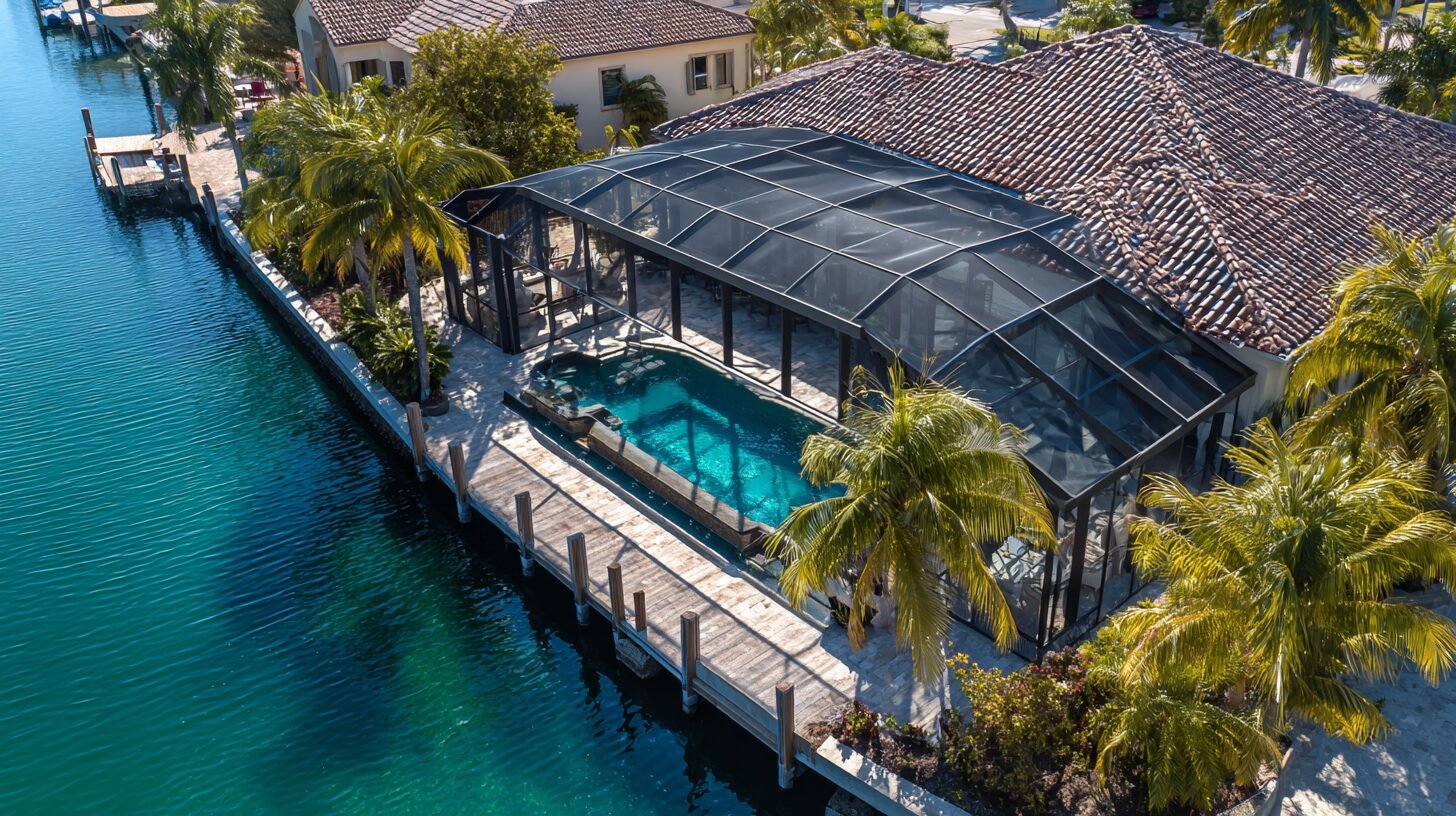
An inground pool in Florida typically costs $35,000 to $120,000 installed in 2026, with most homeowners landing near $60,000 for a standard 16×32 pool with basic decking. Swim season: year-round. Here’s how the numbers break down — and what makes building in Florida different from the national average.
Pool Cost in Florida by Type
| Pool type | Installed cost in Florida | Best for |
|---|---|---|
| Vinyl liner | $35,000 – $65,000 | Lowest upfront cost |
| Fiberglass | $45,000 – $85,000 | Fast install, lowest upkeep |
| Gunite / concrete | $60,000 – $120,000 | Full customization |
Want a number for your exact size and add-ons? The free pool cost calculator prices your pool with Florida’s regional cost factor built in.
What Makes Pool Construction in Florida Different
Florida is the most competitive pool market in America — roughly one in three new single-family homes in some metros is built with a pool, and that volume keeps base prices among the lowest in the country. The flip side: demand surges after hurricane seasons and during spring booking rushes, so quotes can swing 10–15% depending on when you sign.
Two Florida-specific line items surprise newcomers. First, the screen enclosure: most Florida pools are caged to keep out love bugs, leaves, and gators (really), and a quality enclosure adds $8,000–$25,000. Second, the water table — in coastal and southern counties, high groundwater means dewatering during excavation and extra engineering for empty-pool buoyancy.
Fiberglass and gunite split the market here; vinyl is rare because liners fare poorly in year-round UV. Salt systems are the default, not the upgrade.
Pool Costs in Florida’s Major Metros
Florida is one market statewide, but local rules and ground conditions move prices more than most buyers expect. Here’s how the major metros compare with the state ranges above.
| Metro | Pricing vs. Florida average | Local cost drivers |
|---|---|---|
| Miami–Fort Lauderdale | Above state average | Highest labor costs in Florida; Miami-Dade and Broward are a High-Velocity Hurricane Zone, so screen enclosures need products approved for that code; high water table means dewatering is common |
| Tampa Bay | Near state average | Parts of the region (Pasco, Hernando, and Hillsborough counties) are known for sinkholes, so some builders recommend or require soil testing before digging |
| Orlando | At or below state average | Highest-volume pool market in the state; sandy soil digs easily; strong builder competition; HOA approval is the usual bottleneck |
| Jacksonville | At or below state average | Occasional winter frost makes a heat pump more of a necessity than in South Florida; clay and hardpan layers show up in some neighborhoods |
| Naples–Fort Myers | Above state average | Post-hurricane rebuilding keeps builder calendars full; enclosure wind codes and coastal flood-zone rules add engineering on many lots |
The pattern: South Florida and the Southwest coast price highest, driven by labor costs, hurricane codes, and rebuilding demand. Central and North Florida price lowest, thanks to easy digging and intense builder competition. The pool itself costs about the same everywhere; the enclosure, the site work, and the builder’s backlog make the difference.
Whatever metro you’re in, get at least three itemized bids, and compare the enclosure as its own line. It’s the single biggest Florida-specific cost and the easiest place for quotes to hide margin.
How Long Is Pool Season in Florida?
Twelve months, though most owners heat from December through February. A heat pump (not gas) is the standard Florida choice — mild winters make heat pumps three times cheaper to run. Skipping the heater entirely is common in the southern half of the state.
Permits & Rules in Florida
Florida permitting is fast by national standards — many counties turn residential pool permits around in 1–3 weeks. The statewide Residential Swimming Pool Safety Act requires a barrier (fence, approved cover, or alarmed doors) before final inspection, and post-hurricane rebuilding cycles can stretch inspection queues.
Florida Pool Cost FAQs
How much does an inground pool cost in Florida?
Most inground pools in Florida cost $35,000–$75,000 installed. Fiberglass typically runs $45,000–$70,000, gunite $55,000–$100,000, and a screen enclosure — standard in most of the state — adds $8,000–$25,000.
Do you need a fence around a pool in Florida?
Yes. Florida’s Residential Swimming Pool Safety Act requires at least one approved barrier: a 4-foot fence with self-latching gates, an approved safety cover, or door/window alarms on all house openings with pool access.
Is a screened pool enclosure worth it in Florida?
For most Florida owners, yes: it cuts debris cleaning dramatically, blocks mosquitoes and wildlife, reduces chemical demand by filtering UV, and is standard in most neighborhoods — which matters at resale.
Keep planning: compare pool types, understand permits, and read how to choose a builder before you collect bids.